
One finished cut: how do you produce multi-language subtitle versions?
Scenario walkthrough: the cut is final and needs subtitle versions in several languages. Lock one base timeline first, then handle punctuation, line breaks and terminology per language, and review each version in full.
This is a scenario walkthrough, not a customer project record. Use the steps and review criteria to plan your own project.
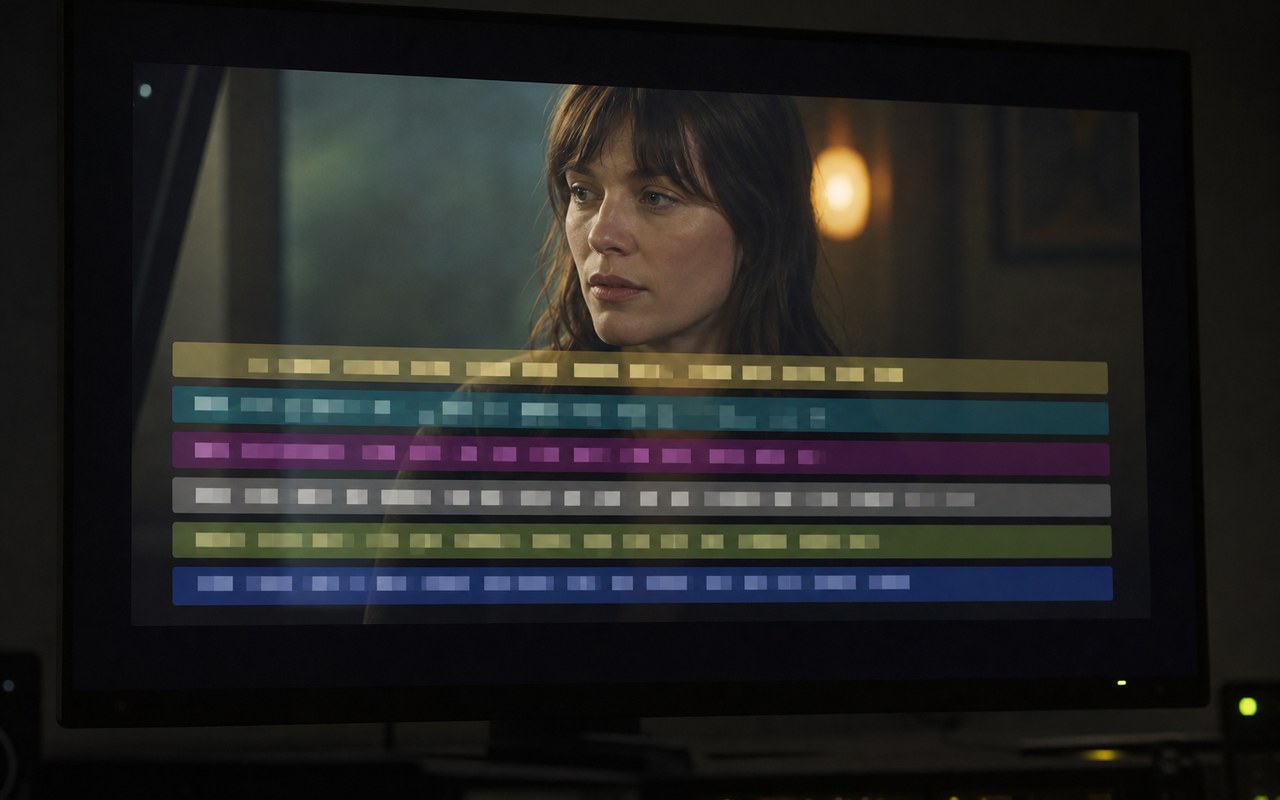
The problem, inputs and goal
Inputs: one locked cut, an approved glossary, brand names and the list of target languages.
Challenge: a single timeline must serve languages with different sentence lengths, punctuation and line-breaking rules, and literal translation can exceed reading speed.
Target: keep the base timeline fixed, and give each language readable, well-broken captions with consistent terms, reviewed in full before delivery.
Work through the problem
- 01
Finalize the base-language captions and lock the timecodes; later languages change wording only, not timing.
- 02
Proofread punctuation and line breaks per language, and keep terms and units consistent via one glossary.
- 03
Watch each language in full to check line breaks, on-screen time and conflicts with picture text.
Describe what you need
Use this as a starting point. Adapt the assets, audience and goal, then review the result.
Translate the locked captions into the target languages without changing timecodes. Adjust line lengths for each language, keep proper nouns outside the glossary in the source form and flag lines that cannot be read in time.
Expected deliverable and review
- Timecodes match the base version, with no shift, compression or dropped line.
- Punctuation, line breaks and display time were proofread per language.
- Terms and brand names read the same in every language, with proper nouns intact.
Questions, answered
Can I use machine translation for captions?
It can serve as a draft, but proofread line breaks, terms and tone per language and check whether each line fits its on-screen time. Unreviewed output is not ready to publish.
What if one language needs longer lines?
Tighten wording or split into two lines without moving timecodes. If it still does not fit, cut secondary information rather than shortening display time below readability.
Explore related workflows
Bring your footage. Start with a clear goal.
Apply the workflow to your own content, review each step and refine the finished video.