
Reusable editing skills
Turn a proven editing approach into a reusable skill. Record input requirements, production steps and review criteria so the next project starts with clear instructions.
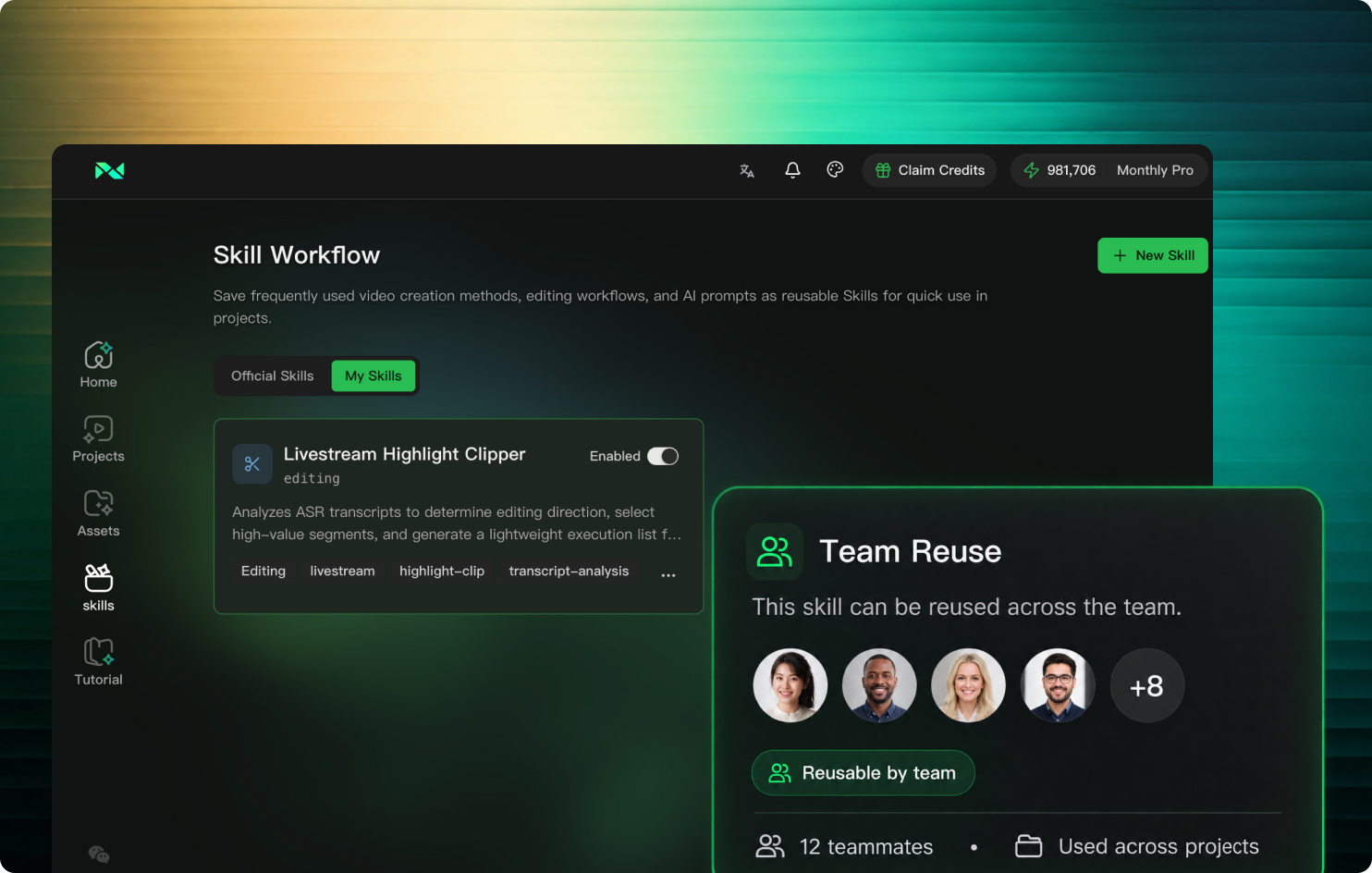
Where this capability fits
Extract methods from a completed project, separating reusable steps from project-specific facts. Keep style rules while replacing names, products and time-sensitive details.
Specify suitable inputs, expected outputs and human review points rather than relying on vague style descriptions.
Test with different footage. When sharing with a team, maintain input requirements and revision notes so outdated rules do not persist.
Start with a clear process
- 01
Choose an approved workflow and identify repeatable steps.
- 02
Save input requirements, structural rules and a review checklist.
- 03
Test in a new project and update the skill based on differences.
Describe what you need
Use this as a starting point. Adapt the assets, audience and goal, then review the result.
Save this lesson-video method as a reusable skill: state the problem, demonstrate steps and summarize. Remove the current course name and require review when footage is missing.
Review before delivery
- Have project-specific details been removed?
- Are input requirements and checks clear?
- Has the method been tested with another set of footage?
Questions, answered
How does a skill differ from a fixed template?
A skill describes an editing method and decision rules; a template generally supplies a preset structure or visual. Review suitability for each new set of footage.
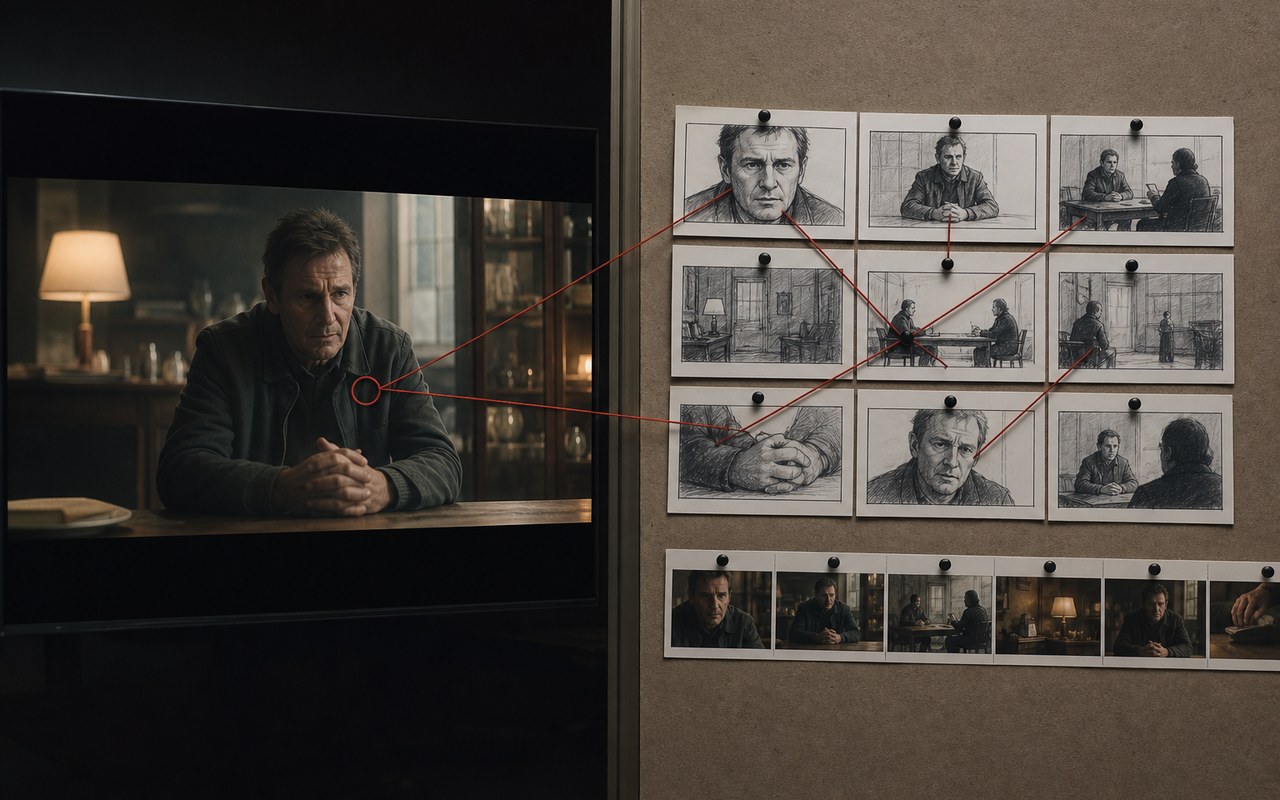
Can reference analysis become a skill?
Translate analysis into your own production rules and validate them in a project. Do not carry source-specific dialogue or content into unrelated work.
Explore related workflows

Bring your footage. Start with a clear goal.
Apply the workflow to your own content, review each step and refine the finished video.