
Without new voice sessions, how do you produce multi-language voiceover?
Scenario walkthrough: the cut is done, but booking a new voice session for every language is not practical. Decide where synthetic voice fits, then verify pronunciation, timing and tone, falling back to a human recording when needed.
This is a scenario walkthrough, not a customer project record. Use the steps and review criteria to plan your own project.
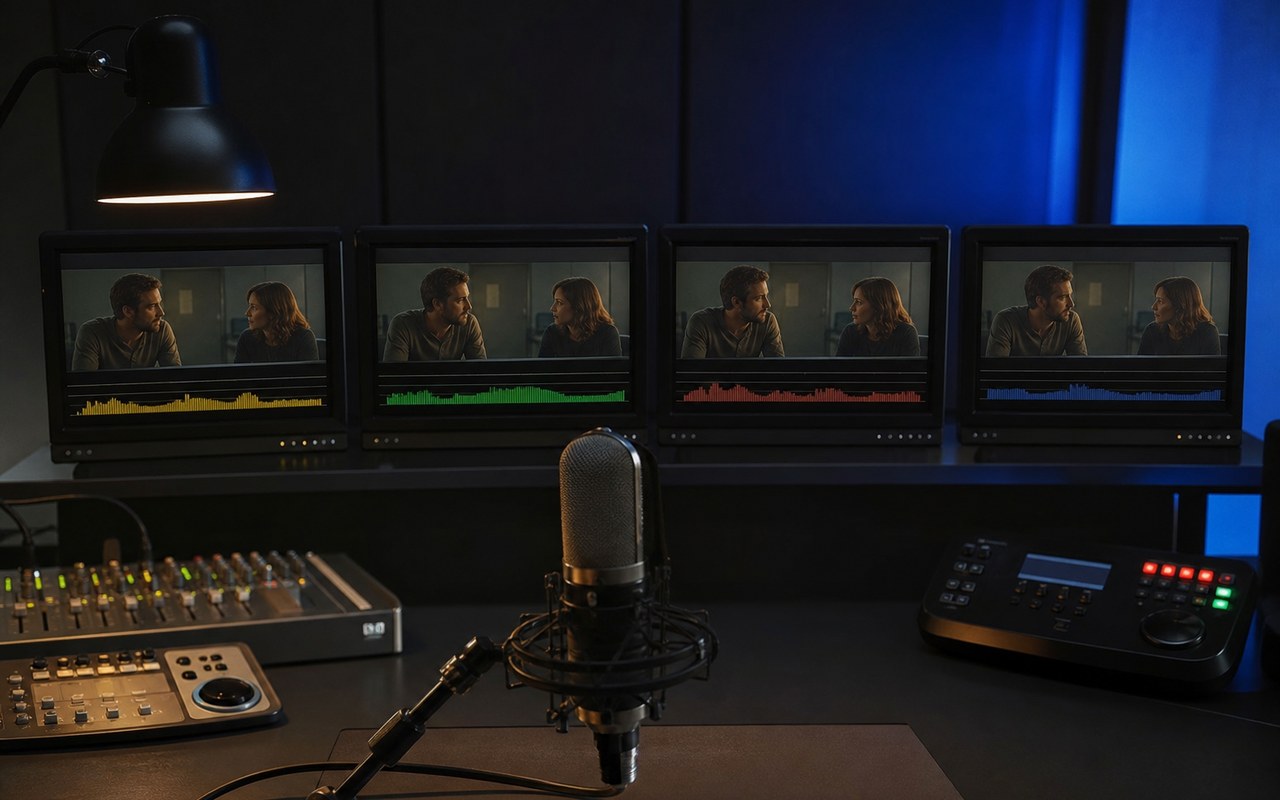
The problem, inputs and goal
Inputs: one cut with its original audio, an approved script and glossary, and the list of target languages.
Challenge: synthetic voice suits clear, evenly paced information, while emotional delivery or formal statements usually call for a human recording. Numbers, brand names and abbreviations are easily misread.
Target: each language tracks the original timeline with correct pronunciation and a consistent tone, and every synthetic segment is labeled.
Work through the problem
- 01
Sort the script by paragraph first: keep ambience and interviewee speech, and send only the remaining narration to synthetic voice.
- 02
Check how numbers, brand names, abbreviations and model codes are read, adding phonetic notes when needed.
- 03
Listen to each language end to end for tone and pauses, then mix the voice with the original audio.
Describe what you need
Use this as a starting point. Adapt the assets, audience and goal, then review the result.
Generate target-language voiceover from this script, keeping each line aligned to its shot. Follow the glossary for numbers, brand names and product codes, and flag uncertain pronunciations instead of guessing.
Expected deliverable and review
- Numbers, brand names, abbreviations and model codes were checked one by one.
- Voice start and end align with the cuts, without rushed pacing or long gaps.
- Synthetic segments are labelled and pauses stay consistent with the rest.
Questions, answered
When is a human recording required?
Use a human recording when performance, dialect, legal or medical statements, or a defined brand voice are involved. Synthetic voice fits informational narration.
How do I fix inconsistent voiceover?
Align tone and terminology in the script, then regenerate by paragraph rather than tuning line by line. Keep one glossary so a term does not change back and forth mid-video.
Explore related workflows


Bring your footage. Start with a clear goal.
Apply the workflow to your own content, review each step and refine the finished video.