
How do you adapt a reference to your own story?
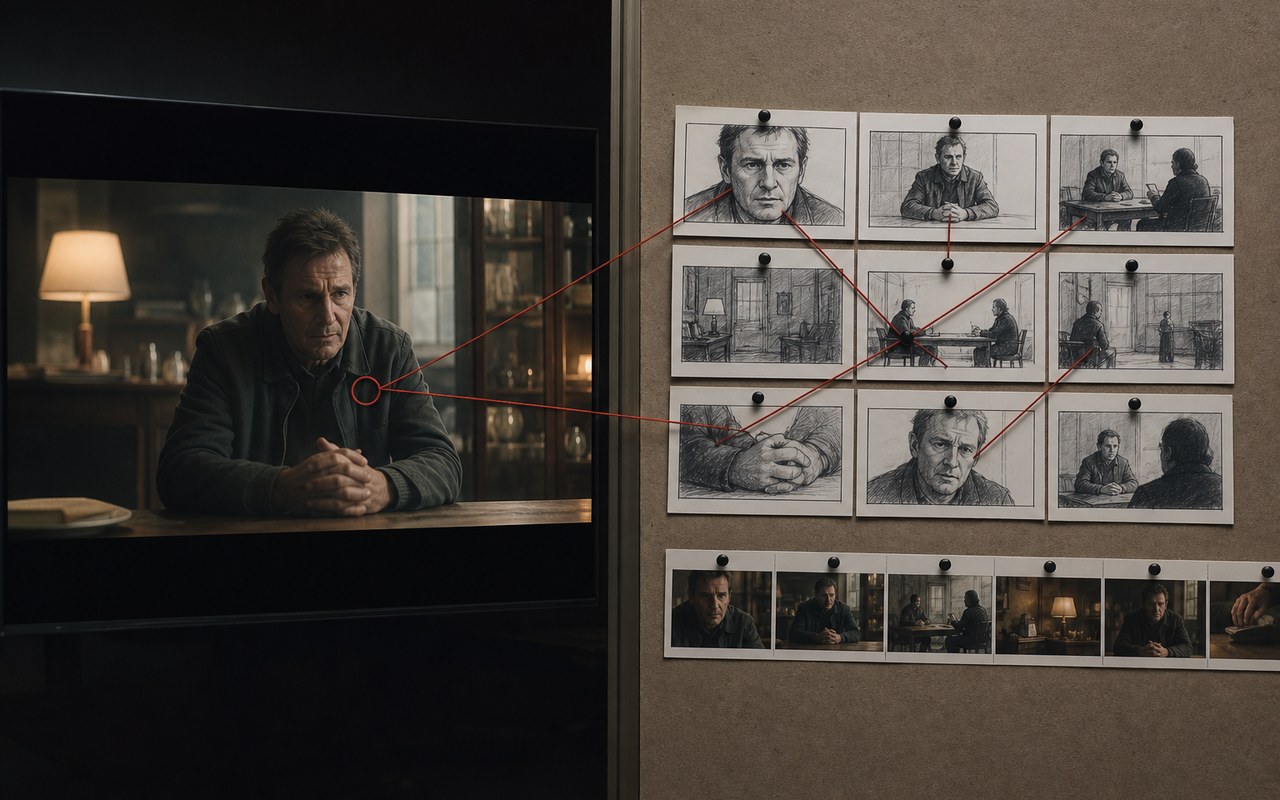
Scenario walkthrough: you like a reference’s rhythm and structure, but have different footage and a different topic. Understand its decisions before building a practical adaptation.
This is a scenario walkthrough, not a customer project record. Use the steps and review criteria to plan your own project.

The problem, inputs and goal
Inputs are a permitted reference and your own topic notes. Identify the specific technique: a question-led opening, demonstration order or sound transition.
Copying shots can leave the new story without logic. Separate source facts from techniques and assess whether your assets serve the same roles.
The target is your own structure and shot list, evaluated by clarity rather than surface similarity.
Work through the problem
- 01
Break the reference into opening, body and ending and note each section’s role.
- 02
Replace source content with your facts, examples and assets and list missing shots.
- 03
Build a rough cut, review logic and pacing and save reusable methods.
Describe what you need
Use this as a starting point. Adapt the assets, audience and goal, then review the result.
Analyze how the reference introduces a question and develops the explanation. Apply that structure to my organization topic without copying dialogue, listing required shots and available coverage.
Expected deliverable and review
- Has source-specific information been replaced?
- Do shots serve your story?
- Does the structure suit the available footage?
Questions, answered
Can the reference’s results be replicated?
You can learn production methods, but structure does not guarantee the same views or conversions. Evaluate how well your content communicates.
Can I immediately save it as a skill?
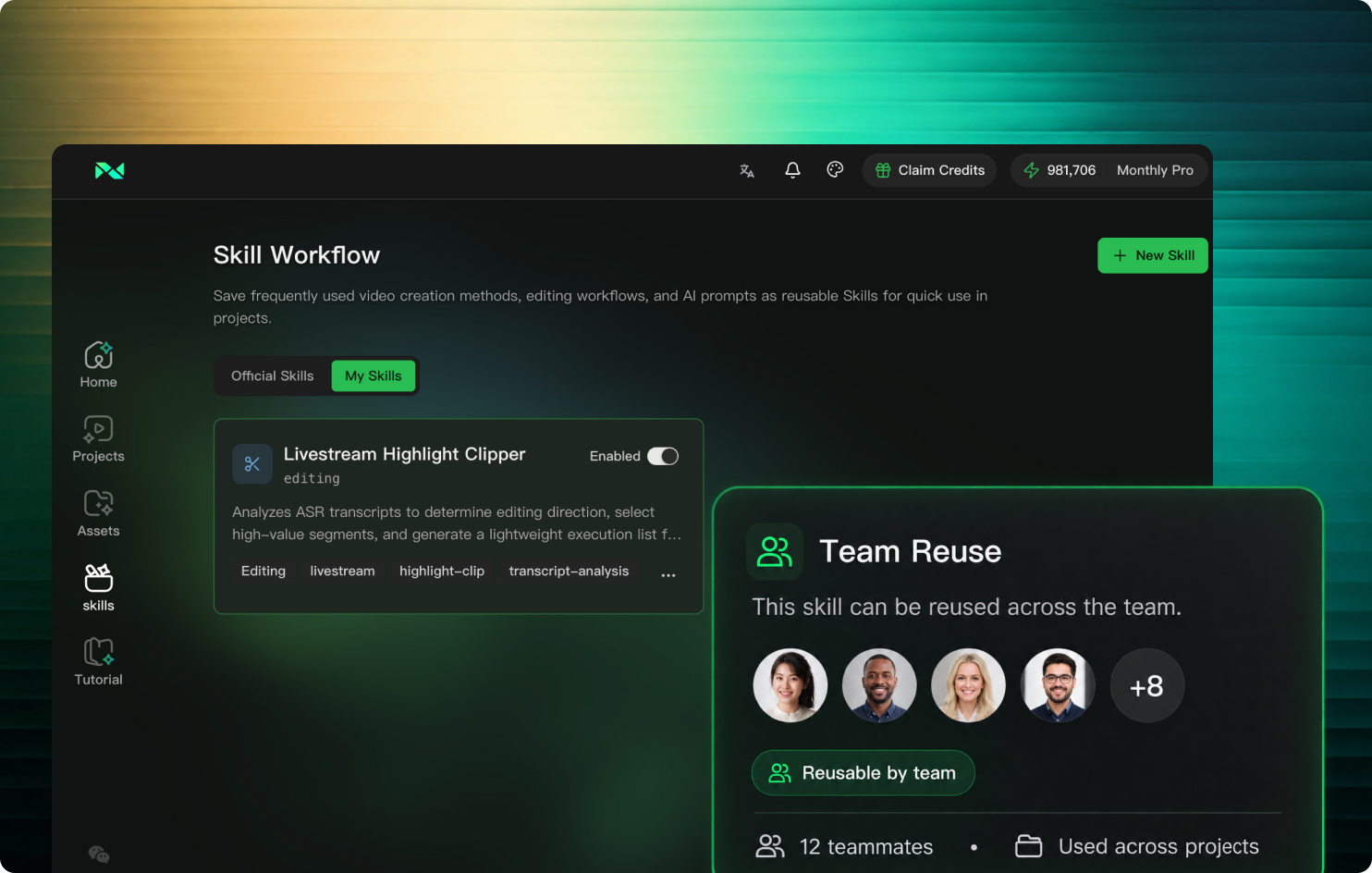
Validate it with actual footage, identify suitable inputs and then save general steps and checks.
Explore related workflows

Bring your footage. Start with a clear goal.
Apply the workflow to your own content, review each step and refine the finished video.